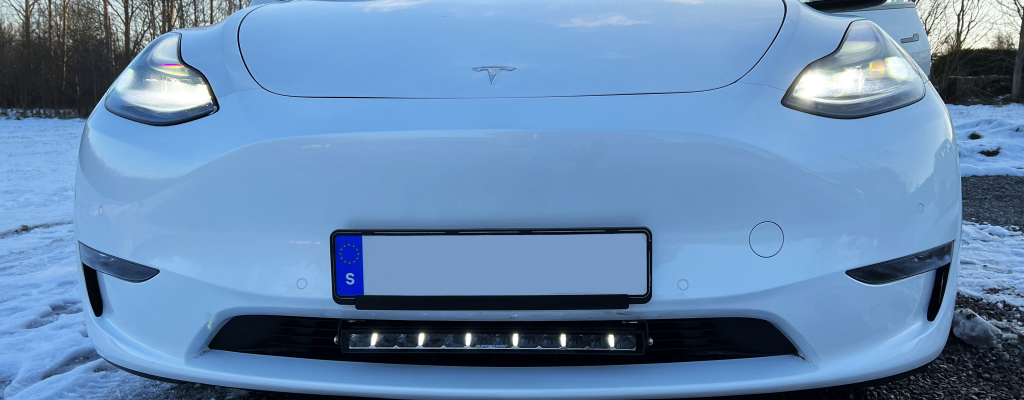
I helgen deltog vi i en orientering en bit utanför Stockholm. Vädret var förhållandevis bra och det hela gick snabbare än förväntat. Det fanns ingen busstation i närheten av startpunkten så vi fick ta bilen. För ungefär två år sedan bytte vi ut vår gamla Volvo mot en eldriven Tesla istället, och kan inte med ord beskriva hur mycket bättre det känns för både plånboken och samvetet. Det tog ett par år att spara ihop till denna elbil, men nu när den är på plats så tycker vi båda att den är värd varenda krona. Vår senaste investering till bilen var externa ljus i form av en ledramp som verkligen passade bilen perfekt. Mycket gott kan man säga om bilen i allmänhet, men hel- och halvljus hade den ungefär lika starka som min gamla Volvo.
Jag är ingen hejare på ledramper direkt och kan inte så mycket om ljus i allmänhet måste faktiskt jag erkänna. Det var en kollega som tipsade om en nätbutik och det var således därigenom vi handlade när det var dags för belysningen. Köpet gjordes hos Ljusgiganten och det gick snabbt och smidigt och leveransen kom inom ett par dagar. Jag fick veta av försäljaren som jag pratade med när jag lade köpet att nästan alla nya bilar har ett kasst hel- och halvljus, någonting jag absolut inte var medveten om. Å andra sidan kan jag ju förstå att man måste dra in på någonting när en bil i sig är så pass dyr som den är.
Då min bättre hälft är betydligt mer tekniskt lagd än mig så var det han som fick göra grovgörat. Sagt och gjort: dagen efter leverans var ledrampen på plats och vi tog oss ut på småvägarna för att se hur produkten levererade i verkligheten. Döm av min (och min sambos) förvåning när jag drog efter andan när ljuset slogs på. Jag ska inte tråka ut er med detaljer, men natt blev dag på älskade lilla Ekerö, låt oss säga så pass mycket.
Anledningen till varför vi från början valde att köpa ledramp för att en kollega (samma kollega som föreslog Ljusgiganten) hade varit nära på att vara med om en viltolycka inte långt ifrån jobbet. Det som räddade henne i sista stund var just ljuset ut i väggrenen. Hennes extraljus hade monterats bara en vecka innan så det var verkligen tur i oturen och hade kunnat sluta riktigt illa.Ledrampen har dubbelradiga dioder och ett så kallat kombinationsljus, vilket gör att det ger både bredd åt sidan och framåt. Då vi redan första dagen fick en ordentlig hagelstorm över oss så kan jag med glädje intyga att produkten även klarar av det lite tuffare klimatet.
För att knyta ihop säcken så gick helgens orientering bra och vi avslutade på (för oss) rekordtid. Bilturen både fram och tillbaka kändes mer än säker och jag tackade min kollega med en ask choklad på måndagen som tack för tipset om belysningen (och för att det var hennes namnsdag förstås).
Läs mer